Big Walk Walkie-Talkie Guide
Long-range voice when proximity chat fades across valleys, caves, and split paths.
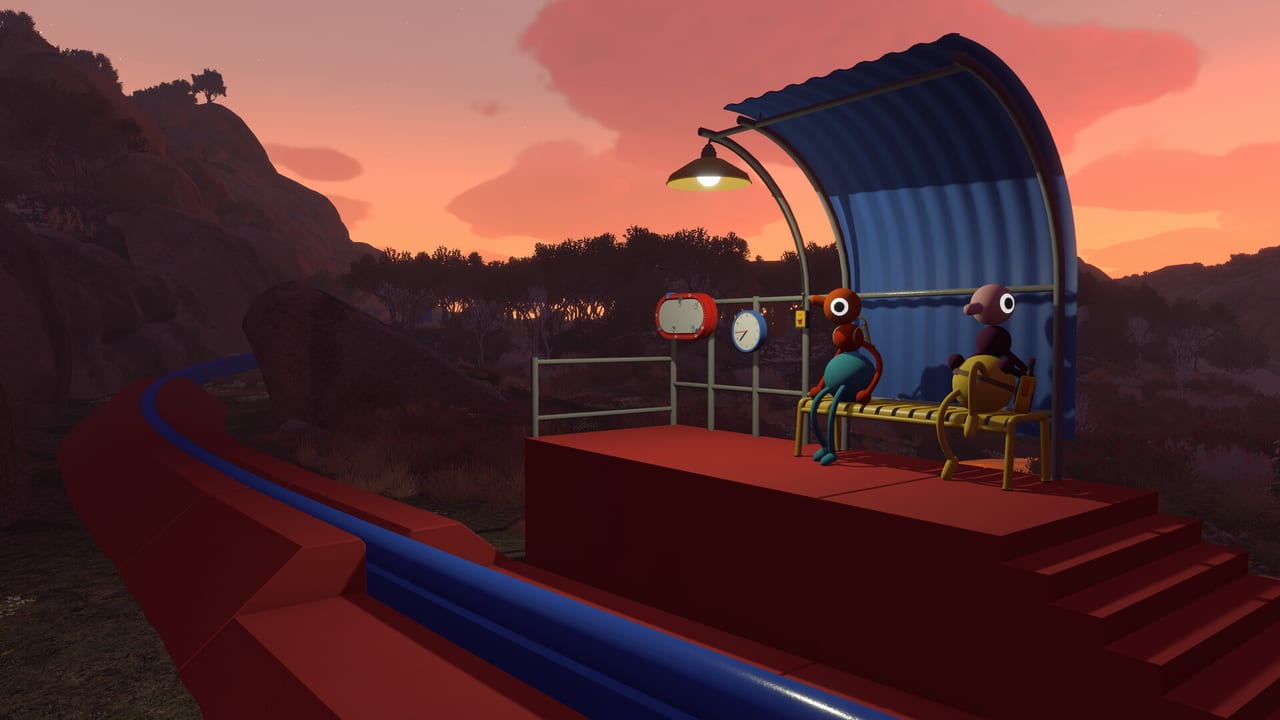
The walkie-talkie is the most important communication tool in Big Walk. House House built the entire adventure around proximity voice that grows quieter with distance, muffles through walls, and disappears when puzzles demand silence. Walkie-talkies restore a long-range voice channel with characteristic crackle and radio color, letting split teams coordinate without breaking the fiction that you are still relying on in-world gear rather than a Discord call.
If your party only reads one tools page before launching, make it this one. Every successful walk—from intimate two-player hikes to twelve-player chaos—needs at least one active walkie-talkie before anyone crosses a ridge alone.
How walkie-talkies work
When you equip a walkie-talkie, your voice routes through the radio system instead of—or in addition to—normal proximity chat depending on context. Teammates who also hold a walkie-talkie (or who are close enough to hear your radio speaker) can respond across distances that would be impossible with naked voice.
Steam marketing copy describes voices that crackle through walkie-talkies, and previews show groups using radios after natural speech fails on windy cliffs. Expect audible degradation: radio audio is not studio-clean, and that is deliberate. It keeps long-range communication feeling like a resource, not a cheat code.
Walkie-talkies do not bypass puzzle rules that hard-disable speech. If a room silences all voice, switching to a radio will not magically restore chat. In those spaces, fall back to Gestures & Arms, laser pointers from Signaling Tools, or whiteboards.
Effective range and limitations
Exact meter counts may shift with patches—track changes on the Updates Hub—but walkie-talkies consistently outperform proximity chat across:
- Open terrain where teammates are visible as dots but inaudible.
- Vertical separation when one player climbs a tower and another searches the ground floor.
- Moderate indoor splits where thin walls still block raw voice but radio repeaters help.
They are weaker when:
- Everyone drops radios to carry puzzle-specific items.
- More than half the party lacks a receiver, creating one-way information bottlenecks.
- Environmental interference is authored for a specific challenge—some late-game spaces may jam radios entirely.
Treat range as team coverage, not individual convenience. Two radios in a four-player group usually suffice if players stay paired. A twelve-player lobby may want three distributed walkie-talkies so each sub-squad has a link back to the host.
Pickup locations and availability
Walkie-talkies appear early. Preview guides and launch impressions place multiple units in the Starting Gymnasium on benches near exits—enough for a small party to grab one each before the first real split. Additional radios exist elsewhere on the island inside camps, storage crates, and puzzle rewards.
Because tools are physical objects, you can drop, trade, or lose them. A player who falls off a ledge might leave a radio behind; someone else must backtrack or share until you find another spawn. Host saves remember which tools your group discovered, but not necessarily which player currently holds them—coordinate pickups through the Multiplayer Hub etiquette.
Channel etiquette
Radio discipline separates smooth walks from noisy ones:
- One speaker at a time. Overlapping radio chatter is harder to parse than proximity babble.
- Callsigns optional but helpful. “Tower team” and “beach team” beat real names when six people talk.
- Confirm receipt. Say “copy” when you understand directions—silent listeners look like disconnects.
- Switch to local voice when reunited. Save airtime and reduce crackle fatigue.
- Mute hot mics. Big Walk includes noise suppression, but push-to-talk habits still help.
Review Proximity Chat before enforcing rules. The game wants you to struggle slightly with communication, not to run a military net, but light etiquette keeps friends from rage-quitting.
Loadout priority and swaps
Inventory holds one active handheld item. Common swap patterns:
| Situation | Hold | Stash or delegate |
|---|---|---|
| Split exploration | Walkie-talkie | Binoculars on backup player |
| Silent puzzle room | Laser pointer or whiteboard | Radio nearby on ground |
| Large regroup | Signal flare | Walkie-talkie after flare fired |
| Night travel | Lantern (when applicable) | Radio partner escorts |
Consult the Tools Tier List—walkie-talkies sit firmly in S tier for communication utility. Only drop yours when a puzzle explicitly requires both hands elsewhere, and tell the party before you swap.
Party size recommendations
| Players | Minimum radios | Notes |
|---|---|---|
| 2 | 1 shared | Partners can pass one unit back and forth |
| 4 | 2 | One radio per sub-team |
| 6–8 | 2–3 | Designate a “net control” host |
| 12 | 3+ | Layer squads with nested call groups |
Detailed role charts live on Party Prep Planner and Party Size Dynamics.
Relationship to other tools
Walkie-talkies complement—not replace—Signaling Tools:
- Flares mark where to go; radios explain why.
- Megaphones amplify local voice but do not replace island-wide radio nets.
- Binoculars spot landmarks you then describe over the radio.
- Cowbells help when someone has a radio but no line of sight in brush.
For hosting responsibilities when radios disconnect mid-session, see Hosting a Session.
Common mistakes
- Skipping radios because Discord exists. External voice trivializes puzzles authored for friction.
- Everyone grabbing binoculars first. Scouting fails if scouts cannot report findings.
- Hoarding extras in one backpack. Spread radios so a single fall does not silence the party.
- Forgetting to re-equip after puzzles. Nothing wastes time like ten minutes of silent wandering.
Summary
Walkie-talkies are Big Walk’s lifeline across distance. Pick them up in the Starting Gymnasium, assign them before splits, and keep at least one active across every major biome. Pair this guide with Signaling Tools for visual backup and Party Prep Planner for pre-session assignments—your future lost-in-the-woods self will thank you.
Frequently Asked Questions
Quick answers to the most common Big Walk questions.
Do both players need a walkie-talkie to talk long range?
Both sides typically need a radio to hold a two-way conversation at distance. One radio can still broadcast to nearby teammates who hear the speaker.
Can walkie-talkies bypass silent puzzle rooms?
No. When a space disables voice, radios follow the same rules. Use gestures, laser pointers, or whiteboards instead.
Where do I find the first walkie-talkie?
Multiple units spawn in the Starting Gymnasium near benches by the exit, early enough for your first split.
How many walkie-talkies should a four-player group carry?
At least two—one per sub-team—so both pairs maintain long-range contact with each other and the host.
Does walkie-talkie audio work across crossplay?
Yes. Voice systems are platform-agnostic in Big Walk crossplay sessions, though individual platform mic settings still apply.