Big Walk Signaling & Non-Radio Tools
Flares, megaphones, lasers, cowbells, and whiteboards when voice alone is not enough.
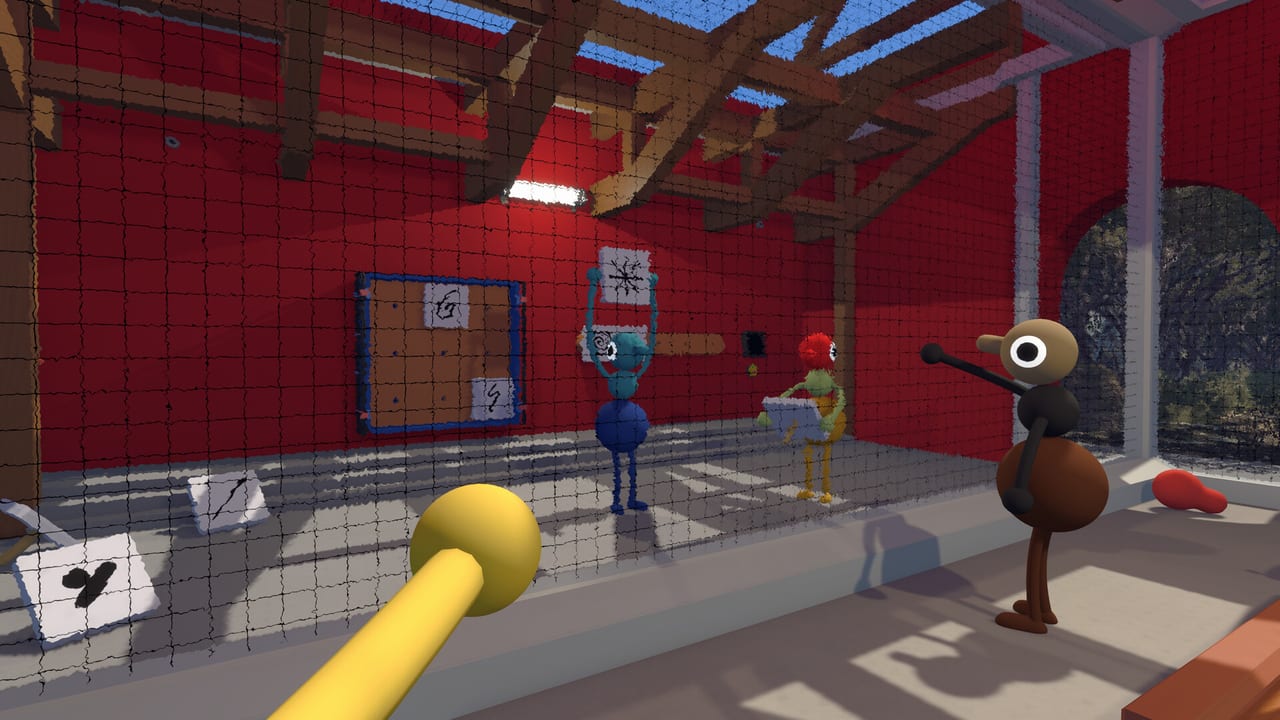
Not every Big Walk puzzle wants you talking. Some rooms muffle speech, others separate teams with soundproof glass, and open-world exploration routinely splits parties beyond comfortable shouting range. Signaling tools fill the gap: visual markers, amplified voice, writable boards, and silly audio beacons that help friends find each other without opening Discord.
This guide covers the major non-walkie communication items—signal flares, megaphones, laser pointers, cowbells, and whiteboards—plus how they interact with Proximity Chat and Walkie-Talkie coverage. Binoculars appear here briefly as scouting companions; deep navigation ties to Island Navigation.
Design philosophy
House House treats tools as toys with jobs. A megaphone is funny on a hilltop and useful during coordinated climbs. A cowbell is both tracking aid and griefing invitation. The whiteboard supports serious puzzle notation and juvenile “kick me” signs stuck in backpacks—preview coverage highlights both extremes.
Because inventory is tight, signaling tools compete with radios and puzzle items. The Tools Tier List ranks them by communication value; this page explains when to carry each one.
Signal flares
Primary role: high-visibility regroup beacon.
Flares launch a bright arc or smoke column visible from enormous distances—ideal when someone is lost, night falls, or your party needs a universal “meet here” signal without spelling coordinates over voice.
Best practices:
- Agree on flare meaning before firing (regroup vs danger vs joke).
- Carry at least one flare per four players in open biomes.
- Pair flares with walkie-talkies so arrivals know why they are running toward the light.
- Do not spam—limited inventory means wasted flares hurt later emergencies.
Preview guides associate flares with weather stations and elevated terrain. Stock up before long splits.
Tier: S-tier regroup tool on the Tools Tier List alongside walkie-talkies for groups that wander aggressively.
Megaphones
Primary role: amplify natural voice beyond normal proximity falloff.
Megaphones project your speech farther and louder without switching to radio crackle. They shine in large lobbies (six to twelve players) when one leader coordinates many listeners spread across a beach or quarry. They are less helpful when puzzles require silence or when teams are already on walkie-talkie nets.
Best practices:
- Designate one megaphone caller to avoid competing shouts.
- Hand off the megaphone when the leader rotates—reviews describe friendly arguments over who gets to hold it.
- Switch back to normal voice or radios when sub-teams peel off.
Limitations: Megaphones still respect hard silence zones. They also attract comedic chaos—lean into it on casual nights, leave them home on precision puzzle sprints.
Tier: A-tier for six-plus player groups; B-tier for intimate duos who already hear each other fine.
Laser pointers
Primary role: silent visual marking at range.
Laser pointers let you highlight levers, doors, paths, or teammates without shouting. PC Gamer’s preview describes players using arm sequences when pointing failed; lasers reduce that friction dramatically in mixed-skill groups.
Best practices:
- Assign one pointer per active puzzle squad.
- Combine with binoculars: scout spots, pointer marks for ground team.
- Avoid shining lasers in teammates’ faces during first-person clips—real-life etiquette applies.
Limitations: Lasers need line of sight. Fog, heavy foliage, or interior mazes can block beams. They also do nothing when the puzzle is purely audio-based.
Tier: A-tier for silent and glass-separated challenges referenced in Challenge Tips.
Whiteboards
Primary role: writable silent communication.
Whiteboards let players sketch diagrams, write short instructions, or leave jokes on physical boards you carry or place in the world. They excel when speech is disabled but complex information must persist—puzzle states, lock combinations, map annotations.
Best practices:
- Keep messages short; handwriting in motion is messy.
- Leave boards at stable landmarks when backtracking is likely.
- Pair with photos on platform share features outside the game if your group allows—optional, not required.
Limitations: Whiteboards are slower than voice and less portable than lasers during combat-free chases. Game Informer notes they are less “effective” than radios in raw utility but high in social delight.
Tier: A-tier for puzzle-heavy sessions; C-tier for pure hiking nights with constant voice.
Cowbells
Primary role: audio tracking and comic relief.
Cowbells produce distinctive ringing audible through moderate distance and foliage. Shake them to help teammates triangulate your position when GPS-style maps are unavailable or when someone forgot a flare.
Best practices:
- One bell per wandering scout—more becomes noise pollution.
- Rhythm patterns can convey simple messages (fast ring = regroup).
- Combine with Gestures & Arms for silent-plus-audio hybrid calls.
Limitations: Bells do not carry semantic information like words or drawings. Dense multiplayer lobbies may find them chaotic.
Tier: B-tier utility, S-tier memes—see Tools Tier List.
Comparing signaling tools
| Tool | Channel | Range | Silent-friendly | Best party size |
|---|---|---|---|---|
| Signal flare | Visual | Very long | Yes | 4–12 |
| Megaphone | Voice amp | Medium-long | No | 6–12 |
| Laser pointer | Visual | Line-of-sight | Yes | 2–8 |
| Whiteboard | Written | Persistent local | Yes | 2–6 |
| Cowbell | Audio ping | Short-medium | Partial | Any |
Loadout combinations
Strong parties layer tools instead of duplicating one type:
- Explorer kit: binoculars + flare + walkie-talkie partner.
- Caller kit: megaphone + walkie-talkie for large groups.
- Puzzle kit: laser pointer + whiteboard, radios stashed nearby.
- Chaos kit: cowbell + golden head—low efficiency, high morale.
Plan combinations on Party Prep Planner before hosting—see Hosting a Session for save implications when tools stay in host worlds.
Crossplay notes
Mixed Steam, PS5, and Switch 2 groups benefit from visual signaling when platform text chat is clumsy. Lasers and flares are universal inputs; whiteboards depend on readable handwriting at screen resolution. Review Crossplay Platforms for voice permissions that affect megaphone value.
Summary
Signaling tools turn Big Walk’s communication puzzles into collaborative art projects. Carry flares for regroups, megaphones for big groups, lasers and whiteboards for silent rooms, and cowbells when you want friends to hear you giggling in the bushes. Always backup with Walkie-Talkie coverage, and revisit this page after patches on the Updates Hub adjust visibility or audio falloff.
Frequently Asked Questions
Quick answers to the most common Big Walk questions.
Which signaling tool is best for regrouping lost players?
Signal flares are the strongest visual regroup beacon, especially in open terrain or at night. Pair them with walkie-talkie directions.
Do megaphones replace walkie-talkies?
No. Megaphones amplify proximity voice locally; walkie-talkies maintain long-range radio links. Large groups often carry both types across different players.
When should I bring a whiteboard instead of a laser pointer?
Use whiteboards when puzzles need persistent written information. Lasers are better for quick, single-target marking at range.
Are cowbells actually useful or just a joke item?
Both. They help teammates hear your position in foliage but carry less information than flares or radios.
Can I use signaling tools during crossplay sessions?
Yes. Visual tools like flares and laser pointers work the same across Steam, PS5, and Switch 2.
Where are signaling tools ranked against each other?
See the Tools Tier List at /tools/tier-list/ for S through C communication utility rankings.