Big Walk Party Prep Planner
Assign walkie-talkies, flares, and spotting tools before your group splits up on the island.
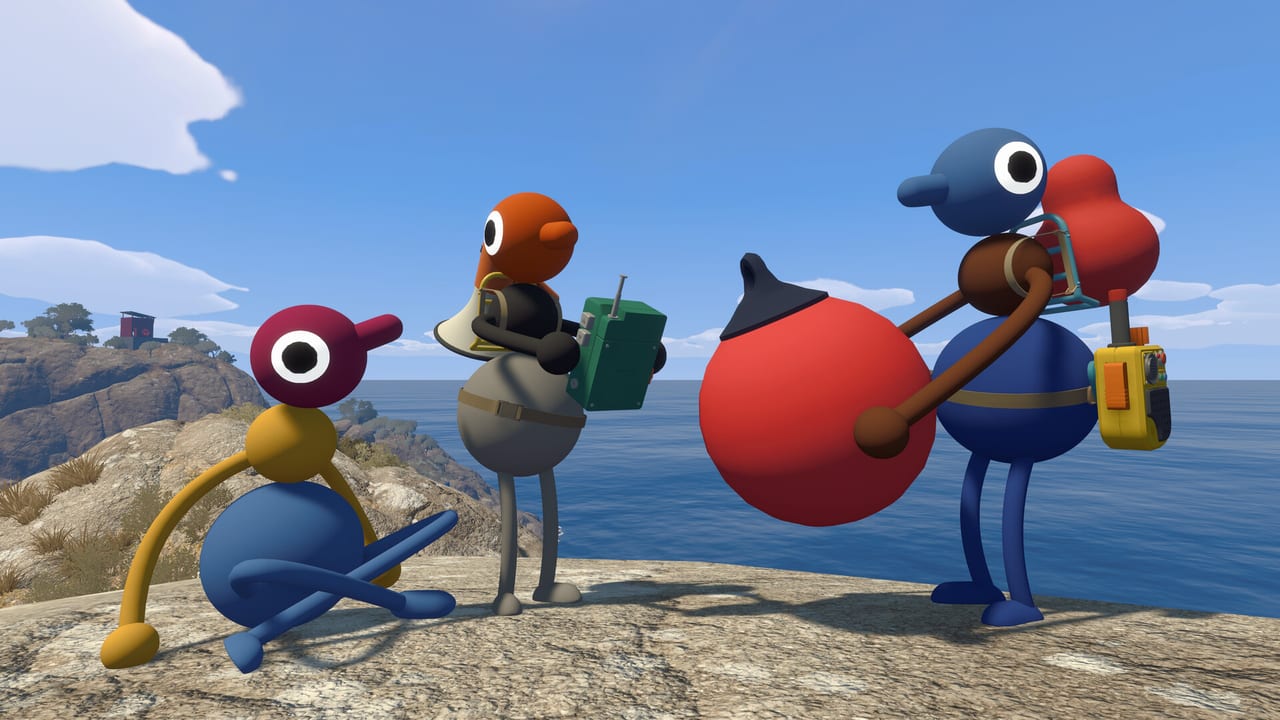
Big Walk punishes unprepared groups gently but repeatedly. Inventory space is limited, proximity chat fades with distance, and puzzles sometimes silence speech entirely—so whoever grabs random toys at the Starting Gymnasium often leaves the real coordination gear behind. The Party Prep Planner exists to fix that five-minute argument before every session: who carries the walkie-talkie, who packs the flare, and who babysits the whiteboard when soundproof glass appears.
This page combines role templates by party size, a markdown loadout table you can screenshot for your group chat, and an interactive planner component embedded on the page (added separately in the site template). Read Tools Hub for item overviews, Tools Tier List for priority rankings, and Multiplayer Hub for host rules before you roll dice on assignments.
How to use this planner
- Confirm player count and who hosts—progress sticks to the host save per Host Saves.
- Pick the section below matching your lobby size (2, 4, 6, or 12).
- Assign named roles so duplicates are intentional, not accidental.
- Cross-check against the loadout table before leaving camp.
- Use the interactive Party Prep Planner widget on this page to toggle tools and export a shareable summary when the component is available.
Revisit assignments when players join mid-journey or when Updates Hub patches rebalance tools.
Interactive Party Prep
Choose a party size to see a suggested communication loadout.
Suggested roles
Keep Discord closed during the walk; test proximity chat first.
Interactive planner on this page
An interactive Party Prep Planner component will render directly on this article, letting you select party size, toggle tools, and highlight uncovered S-tier gaps from the Tools Tier List. Until you see the widget below the article body, use the static tables in this guide—they mirror the same defaults the component ships with.
The widget does not connect to the game; it is a pre-session checklist only. Hosts should still verify in-game inventories after the first loot room.
Roles by party size: 2 players
Two-player Big Walk is the most intimate experience House House supports—focused co-op where both players hear most proximity chat without megaphone theatrics. Roles collapse into dual generalists with one backup specialty each.
| Role | Player | Primary tools | Responsibility |
|---|---|---|---|
| Navigator | Player A | Walkie-talkie (shared), binoculars | Calls routes, reads landmarks |
| Scout | Player B | Signal flare, laser pointer | Regroup beacon, silent marking |
Tips for duos: Pass a single walkie-talkie back and forth instead of duplicating radios. Keep one silent tool between you—laser pointer usually beats whiteboard for two-person puzzles. Review Party Size Dynamics for pacing differences versus larger groups.
Roles by party size: 4 players
Four players match House House’s core puzzle authoring baseline. Expect simultaneous splits into two pairs rather than one leader and three followers.
| Role | Player | Primary tools | Responsibility |
|---|---|---|---|
| Host / Net control | Player 1 | Walkie-talkie | Session owner, Join Codes, radio hub |
| Spotter | Player 2 | Binoculars, flare | Scouting, regroup signals |
| Puzzle lead | Player 3 | Laser pointer, whiteboard | Silent rooms, marking objectives |
| Flex / comic relief | Player 4 | Cowbell, spare flare | Audio pings, backup items |
Ensure two walkie-talkies minimum—one per pair. Read Walkie-Talkie for etiquette.
Roles by party size: 6 players
Six players introduce a third sub-team without full twelve-player chaos. Layer caller + two pairs.
| Role | Player | Primary tools | Responsibility |
|---|---|---|---|
| Host caller | Player 1 | Walkie-talkie, megaphone | Broadcast plans to all sub-teams |
| Alpha lead | Player 2 | Walkie-talkie, binoculars | Pair A navigation |
| Alpha support | Player 3 | Signal flare | Pair A regroup |
| Beta lead | Player 4 | Laser pointer | Silent puzzle marking |
| Beta support | Player 5 | Whiteboard | Persistent puzzle notes |
| Wanderer | Player 6 | Cowbell, spare binoculars | Search off-path secrets |
Megaphones rise to A-tier here—see Signaling Tools. Confirm Crossplay Platforms if three platforms appear in one lobby.
Roles by party size: 12 players
Twelve-player lobbies are “absolute mess” mode per Steam marketing—but puzzles still cap around four active solvers. Assign puzzle teams explicitly; give everyone else exploration toys so they stay engaged without crowding the solution room.
| Squad | Players | Primary tools | Responsibility |
|---|---|---|---|
| Command | 1–2 | Walkie-talkie, megaphone | Host + co-host radio net |
| Puzzle core | 3–6 | Laser pointer, whiteboard, walkie-talkie | Active challenge solving |
| Scouts | 7–9 | Binoculars, flares | Map edges, regroup beacons |
| Wanderers | 10–12 | Cowbells, golden head | Secrets, morale, audio pings |
Carry three or more walkie-talkies and at least three flares. Puzzle core should not hoard every tool—scouts need regroup items when wanderers trigger distant landmarks.
Suggested loadout table (all sizes)
Use this master reference when the interactive planner is unavailable:
| Party size | Walkie-talkies | Flares | Binoculars | Laser pointer | Megaphone | Whiteboard | Cowbell |
|---|---|---|---|---|---|---|---|
| 2 | 1 (shared) | 1 | 1 | 1 | 0 | 0 | 0 |
| 4 | 2 | 1–2 | 1 | 1 | 0–1 | 1 | 0–1 |
| 6 | 2–3 | 2 | 2 | 1 | 1 | 1 | 1 |
| 12 | 3+ | 3+ | 2–3 | 2 | 1–2 | 1–2 | 2+ |
Numbers show party totals, not per-player duplicates. Adjust for biome: night routes add lanterns; open highlands prioritize flares.
Pre-flight checklist
Before launching from the Starting Gymnasium:
- Host confirmed available for full session (Hosting a Session).
- Join Code copied for crossplay friends (Crossplay Hub).
- Every sub-team has long-range voice covered.
- At least one silent tool packed for glass or mute puzzles.
- Players know who drops gear mid-puzzle to avoid silent wandering afterward.
When loadouts fail
Big Walk rarely hard-fails when tools are missing—you adapt with Gestures & Arms and hiking back for drops. Failure feels like lost time, not game over. If adaptation stops being funny, regroup at camp, re-run this planner, and accept that comedy is part of the design per Proximity Chat philosophy.
Related pages
- Tools Hub — Item descriptions and hub links.
- Tools Tier List — S–C priority when slots conflict.
- Walkie-Talkie — Radio range and etiquette.
- Signaling Tools — Flares, megaphones, lasers, bells.
- Party Size Dynamics — Behavioral differences by headcount.
Screenshot the loadout table, open the interactive planner when live, and walk confidently knowing someone—not everyone—carries the flare.
Frequently Asked Questions
Quick answers to the most common Big Walk questions.
Where is the interactive Party Prep Planner?
It is embedded mid-article on this page. Choose a party size to refresh the suggested roles, then mirror those picks with the loadout tables below.
How many walkie-talkies does a four-player group need?
At least two—one per pair—so both sub-teams maintain long-range contact during splits.
Do twelve-player groups need twelve of every tool?
No. Share tools across squads using the twelve-player table; puzzle teams stay small while scouts and wanderers carry regroup gear.
Should the host always carry the walkie-talkie?
The host should hold at least one radio or megaphone net-control item, but pairs can distribute extras. Host must still own the save file.
Can I skip planning for casual nights?
Yes for duos who stay together. Any group that splits across terrain benefits from five minutes with this planner.